Blog

  • From NAFTA to USMCA…. What’s in a Name?

    NAFTA as a name, the North American Free Trade Agreement, is dead. It now comes under a new guise, the “United States-Mexico-Canada Agreement” (USMCA). If everything goes as planned, U.S. officials will join their Canadian and Mexican counterparts in Buenos Aires on tomorrow (30 November) for a ceremonial signing.**What’s in it?**While the name is new, the fundamental relationship between the three parties remains effectively the same. Not much has changed that would lead me to believe that trade between the three countries will be dramatically altered. One significant addition is the requirement that Mexico gives a better deal to its workers. In order for automobiles to be exported to the U.S., 40% of value must now be produced in factories that pay workers more than $16 per hour.With better productivity and automation, this places U.S. factories in a stronger position. However by introducing more automation themselves, Mexican firms can still compete. On the Canadian side, US dairy and wine producers get better access to the Canada market.The new requirement that tariff-free products have 75% of parts from the country, rather than the previous 62.5%, may not benefit anyone if manufacturers find that it is too costly for them to change their current supply chain. Instead it might be better to surrender the tariff benefit and continue to import parts from outside the zone.From an ESG perspective, it is pleasing to see an increased emphasis on labour and environmental rights. The USMCA makes a number of significant upgrades, which should have a positive impact especially on Mexico.One dangerous component of the agreement is that it has a sunset clause with the agreement expiring in 16 years, unless the countries agree to an extension after 6 years.What’s not includedCanada and Mexico have been pushing for the removal of President Trump’s 25% steel and 10% aluminium tariffs ahead of the signing. So far the tariffs have remained in place. The solution might be a quota system, however this is unlikely to be agreed upon before tomorrow.What are the next stepsThe U.S. president’s next challenge is to get the deal through a new Congress. Earlier this month, 12 U.S. Republican Senators urged President Trump to submit the deal to update NAFTA to Congress by year-end, before Democrats assume control of the House of Representatives. But this is unlikely to happen. A Democratic Congress might ask for a number of alterations prolonging the ratification process next year.**Will USMCA bring opportunities for investors?**It is too early to say if the new NAFTA will bring opportunities for investors. It seems likely that with the new agreement in place, trade between the three partners will continue to flow. This is in contrast to the trade relationship between the US and China that is yet to thaw.This situation could benefit Mexico. A lot of the goods that are currently supplied by China could be shifted to closer to home.Take the automobile sector. Mexico is the primary exporter of automobiles and automobile parts to the U.S. With no tariffs on Mexican cars, and additional duties imposed on Chinese automotive parts, there will be less competition. Additionally, China used to buy large quantities of automobile parts from the US, but now with retaliatory tariffs imposed by the Chinese government these will also become costlier. Again there could be an opportunity for Mexico to step in.Finally, a new NAFTA agreement might help to bring an end to the uncertainty that has affected the Mexican currency in the last few years.Mexico remains a focus for usGiven all the above, Mexico will remain a focus for Mobius Capital Partners. There are several interesting companies with strong business models that have been unfairly dragged down by the recent uncertainty. We believe these firms not only offer value, but also have great potential for ESG and operational improvements.We will be keeping a close eye on the wider macro environment, as Andrés Manuel López Obrador is sworn in as President the day after the signing of USMCA.

  • Now is the Time to Revisit Emerging Markets

    In 2016, China and India had 4.7m and 2.6m STEM (Science, Technology, Engineering and Mathematics) graduates. The United States and Japan had 568,000 and 195,000 respectively

    From 2000 to 2017, the number of internet users in Africa has increased from 4.5 million to 453.3 million – an increase of 9,973%, or an increase of 31.2% a year for 17 years

    Distance between London to Edinburgh: 534 km. Fastest route by train: 4 hours 14 minutes. Distance between Shanghai and Beijing: 1,318km. Fastest route by high speed rail: 4 hours 18 minutes

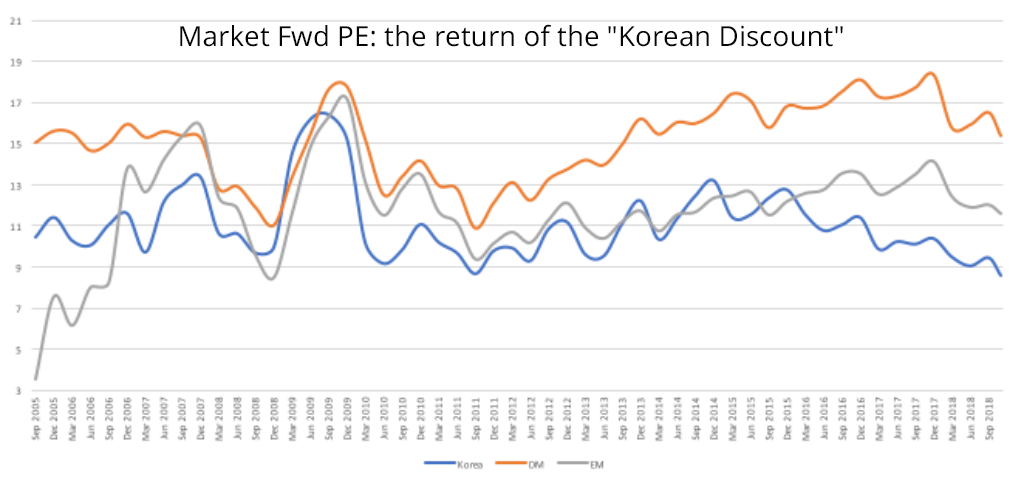
    When I first started investing in emerging markets (“EM”) in the 1990s, the landscape looked very different.Back then, emerging markets had unsustainable levels of debt, unpredictable politics, inexperienced central bankers and were heavily reliant on the developed world. Companies focused on low-cost manufacturing and had very basic corporate governance, lagging far behind those in developed nations.Today, the landscape has changed entirely. Populations and living standards have ballooned, creating enormous middle classes with growing consumption levels. Governance has improved significantly, with shareholder engagement and activism not just supported but actively encouraged by companies and governments alike. Most crucially, emerging markets now offer a dramatically more attractive set of companies. These businesses and management teams no longer follow – they lead.Now is the time to revisit emerging marketsMany market participants have been holding off investing amid the recent volatility, particularly in view of falling emerging market currencies. While it can be argued that weakened currencies make it more difficult for EM firms to keep up with hard currency interest payments, we should also acknowledge that this offers more attractive prices for overseas investors.Valuations remain far too low across the board in my view with EM forward P/E multiples at just 11.4x – lower than in 2009 and 2007, and far lower than the >15x multiples we saw in the 90s. There is a real opportunity for investors to identify firms that are unfairly dragged down by concerns that are no longer relevant today.For example, both private and public debt levels in most emerging markets are far lower than the levels we saw in past debt-driven crises. This mitigates concerns about the rising cost of hard currency interest payments. Even in the case of companies with high levels of debt, active investors can carefully run through individual company balance sheets and talk to management to identify firms that are able to protect themselves.Second, although we are finally seeing an uptick in EM inflation after nearly 20 years of decline, this will not lead to the wild levels we saw in previous decades. Inflation will be kept in check by factors such as more prudent and proactive monetary policies. Furthermore, economies of scale, both from technological innovation and from population growth, enable producers to cope better with fluctuations in demand.Third, there has been a notable shift from traditionally export-driven industries such as textiles, towards sectors such as technology that tap much more strongly into the home market. When I go to trade shows today it is the EM companies that have started to dominate in areas such as robotics and high value component manufacturing. Cutting-edge innovation is particularly coming from Asia, rather than from developed markets. This has resulted in increased profitability as well as higher R&D levels among EM players.These developments combined with the enormous increase in population and internal demand, make EM companies today far less dependent on international trade. Intra-EM and especially intra-Asian trade is a common characteristic for a number of sectors such as technology, fashion, shipping and media.In China, technology ‘unicorns’ are being born with increasing frequency, without ever leaving the domestic market. In Indonesia, entire sectors (such as banking) remain undeveloped, offering numerous multi-billion-dollar markets to tap into for South East Asian companies that can combine cultural and domain expertise.These sorts of domestic and regional growth opportunities, regardless of what happens in developed markets, offer resilience at a time when many are concerned about fallout from the ongoing trade war.Fourth, and a point of interest from an asset allocation perspective, is that EM flows are no longer solely driven by broad-sweeping sentiment, but rather by specific themes, sectors, and specific exposure to macro events. We see investors evaluating each country individually on its potential to learn from previous lessons in their approach to policy and governance.Take Mexican equities, for example.With Carlos Urzua’s appointment as finance minister, equity markets greeted his intentions to slash excessive salaries and corruption enthusiastically. The S&P/BMV IPC Index has seen a 10% gain through June and July, despite emerging markets having fallen overall (the MSCI EM Index fell about 6%).Even the recent sharp currency swings have varied from country to country. South East Asian currencies such as the Singapore and Taiwanese dollar have held steady, compared to sharp declines for the Argentine Peso and Brazilian Real.Finally, and perhaps most importantly for Mobius Capital Partners, we are entering a period of improvement in ESG (environmental, social, and governance) standards. The appetite of emerging market companies for investment puts them under pressure to respect governance principles.From poor capital allocation and misaligned incentives to unsustainable supply chains, there is enormous potential to drive positive change across the board. As governments introduce progressive policy changes, companies are starting to listen. This is the time for investors to be as active as possible.It is our firm belief that these four trends present a unique opportunity for a concentrated and diligent approach, focusing deeply on the specific drivers and nuances of each individual company and country. Emerging market economics and companies are extremely well-positioned to generate significant and sustainable real earnings – if they make the right decisions.Now is the time to revisit emerging markets.Some further interesting facts about emerging and frontier markets:

    In the last 9 years, the number of universities from emerging markets ranked in the top 100 has more than doubled, from 6 to 15

    Since the fall of the Berlin Wall towards the end of 1989, the number of African countries that hold multi-party elections has increased by 2.6 times – from 19 before, to around 50 today

    In 2017, it is estimated that the median age in the Philippines is 23.5. In Bangladesh it is 26.7, in Nigeria 18.5

    According to Transparency International, 75 out of the 100 of emerging market multinational companies it assessed in 2016 scored less than 5 out of 10 in terms of transparency

    In China, for 2017, the use of natural gas grew four times faster than oil, +15% to +3.9%

    Sources: QS World University Rankings, CIA World Factbook, World Economic Forum, Internet World Stats, Transparency International, BP Statistical Energy Review, Travel China Guide

  • Book Club: What We’re Reading And Why – Oct 2018

    One book that gave me plenty of food for thought was My Journey at the Nuclear Brink by William Perry, a former Secretary of Defence of the U.S. Perry started his career advising on the Cuban Missile Crisis, he was involved in crafting a defence strategy in the Carter Administration to offset the Soviets’ numeric superiority in conventional forces, and presided over the dismantling of more than 8,000 nuclear weapons in the Clinton Administration.His book gives a tremendous insight into the dangers of nuclear war and the impact it could have on mankind. More importantly Perry, as a key figure in decision making, shows us how easily mistakes can be made and how one human error could bring the world to nuclear destruction.I recently visited Nagasaki and Hiroshima in Japan. A terrible reminder of the incredible power of nuclear bombs. Today the scale of nuclear weapons has increased dramatically and so has the need to keep aware of the dangers of nuclear warfare.The other book I recently read was The Wizard of Lies by Diana B. Henriques about Bernie Madoff and the scandal that erupted around his funds that resulted in billions or dollars of losses to investors.This book provides an excellent lesson for investors because it shows how easy it is for fraudulent actors in the financial world to operate freely for a long period of time without being detected.It shows how even financial regulators like the U.S. Security and Exchange Commission could be hoodwinked despite being warned by some whistle-blowers regarding the illogicality of Madoff’s operations.Henriques’ book teaches us never to be afraid to ask questions regarding our investments. And to keep asking. It also underlines the importance of minority opinions which go against all supposedly reasonable sentiments but might turn out to be correct in the end.

  • VIDEO: What makes the Mobius Investment Trust unique

    Throughout their careers Mark Mobius, Carlos Hardenberg and Greg Konieczny have managed some of the largest emerging markets fund in the world. In this video the founders of Mobius Capital Partners talk about their newest venture, the Mobius Investment Trust.The trust focuses on a very concentrated portfolio of 20 to 30 companies in emerging and frontier markets. It follows a specialized, single strategy built around partnering and working closely together with companies to improve corporate governance. With currencies down and companies tending to be undervalued the time seems right for this innovative and focused approach to investing in emerging and frontier markets.

  • Why Frontier Markets are the New Emerging Markets

    “A brave world, Sir, full of religion, knavery, and change: we shall shortly see better days.” Aphra Behn ‘The Roundheads’ act 1, sc. 1In a homogenised world, asset class definitions are seemingly less relevant. Tencent is more an equal to Facebook and Google than heir; per capita GDP is higher in Korea than Spain1; and developed and emerging market demographics have begun to look increasingly similar (the birth rate in Switzerland is higher than Thailand2). Development curves have plateaued. Investors looking for unchartered territories need to look further: to frontier markets.MSCI first put together an index of frontier markets in 2007. Comprising of twenty-six markets across Asia, Eastern Europe, Africa, Latin America and the Middle East (which accounts for approximately 60% of the universe), these countries generally have little in common: more a set of individual opportunities experiencing either positive or negative economic cycles. Wealthy Middle Eastern countries suffering from an oil shock, restructured Latin American countries aspiring to former glories and burgeoning African states. In some ways they offer what Emerging Markets did in the 1980s: 21 of the 25 fastest growing countries are frontier markets3. Whilst this does not necessarily translate directly to stock market returns, it creates an environment for sustained earnings and cash flow growth. These are key tenets of Mobius Capital Partners’ investment philosophy and these markets have already thrown up a host of exciting stock specific opportunities.Frontier markets also offer immensely positive demographics. This ‘card’ is frequently played but at Mobius, we believe there are two central benefits of a growing population. One is direct: a large, productive workforce. More workers mean more income, more taxes and more consumption by their families. The other is indirect (and perhaps more powerful): more income means more saving. More saving means more investing and – in theory, although not always in practice – more stable, self-funding capital markets. This stable base of domestic capital creates a fertile ground for credit creation, lowers the cost of capital and encourages domestic investment. Chile is a fantastic example of the benefits a concerted government effort to support the pension system can have on the local capital market. Frontier markets would be wise to follow.There are some severe drawbacks to rapidly changing demographics. Large populations and low productivity can burden governments, driving fiscal and monetary policy mistakes. Large numbers of low or unskilled citizens out of work is a social or economic problem that can rapidly become a political one.Indeed, like their emerging market forebears, frontiers face a host of challenges – both economic and political. Central bank policies are frequently interfered with, exchange rates volatile and many of these nations face the poisoned chalice of natural resource wealth, a frequent excuse to under-invest in other sectors or avoid difficult supply-side reforms. An obvious example is Nigeria, which has felt the full force of an exogenous shock (lower oil price) against an ill-prepared and poorly diversified economy. Nigeria’s currency collapse and capital controls have been a feature of the space, but this is slowly being addressed. Saudi Arabia suffered similarly but their efforts to reform are encouraging, if nascent. Democracies – if and where they exist in frontier markets – are often young. In Africa, for example, the rapid democratization process (“second liberation”) began only in the first half of the 1990s: after the 1950s and 1960s heralded freedom from European colonisers, escaping the clutches of despots came later to many African countries.There are some powerful differences between now and the 1980s, which strongly support the case for frontier markets. Most obvious are the shifts in technology. High-speed communications and the widespread availability of cheap hard- and software means every teenager who can save $30 is walking around with a computer in his pocket multiples times more powerful than those in at the Federal Reserve in 19804.Added to this are cloud computing and devolved processing power. The opportunities are huge for citizens in frontier markets to learn, do business and innovate. Indeed, the technology businesses we have seen from Argentina to Kenya are exciting prospects both commercially and socially. Standing on the shoulders of (FAN)Giants5 in 2018 is no bad place to be for the entrepreneurially minded citizens of frontier nations. The feedback loops are immensely powerful too: lower capital intensity and higher GDP contribution from services. For a frontier government, creating an environment-friendly to technology investment enjoys potentially high returns. So the eclectic mix of the frontier market presents the risks and opportunities of their emerging forebears, but with an entrepreneurial technology angle which can create idiosyncratic opportunities. Our job is to identify them.References $29.7k in Korea vs. $28.1k in Spain, World Bank 2017 1.54 births/woman in Switzerland vs. 1.48 births/woman in Thailand, World Bank 2016 IMF World Economic Outlook (April 2018) Real GDP Growth IBM PC in 1981 had an Intel 8088 processor at 4.77MHz. A 2010 dual-core third generation Snapdragon chip from Qualcomm has 1.2GHz – more than 250 times as powerful. Facebook, Amazon, Netflix and Google.