View Article in This is Money
Category: news
-
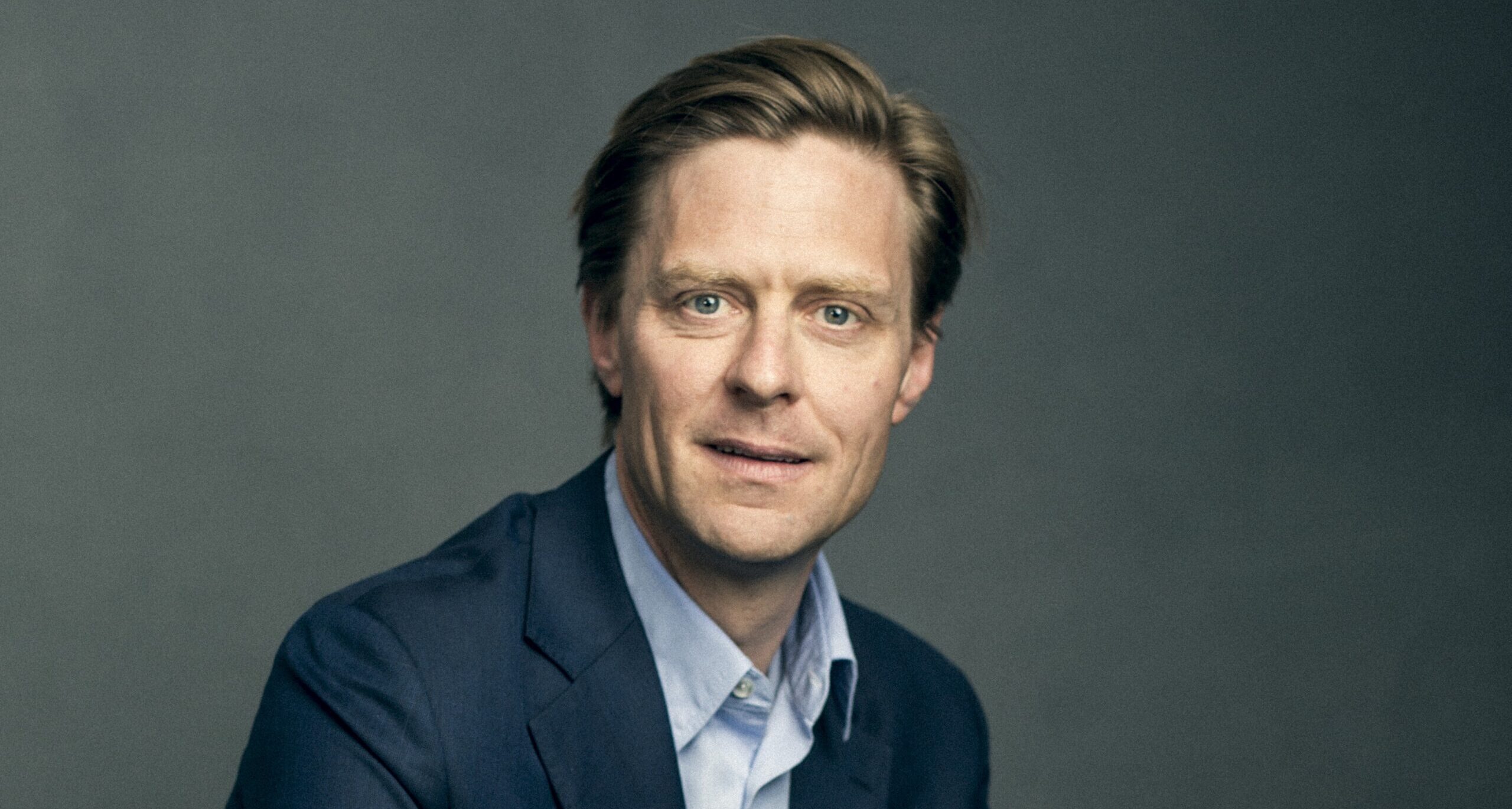
Meet the manager: Carlos von Hardenberg
We’re excited to share the AIC’s Meet the Manager feature with Carlos von Hardenberg, Lead Manager of Mobius Investment Trust and the Mobius Emerging Markets Fund.
If you weren’t a fund manager, what job would you do?
I would have loved to be an entrepreneur, as I’ve always admired their vision, courage, and resilience in turning ideas into lasting businesses. Although I guess that mirrors what we do as investors – seeking out listed companies often still led or owned by founding families, backing those with genuine entrepreneurial spirit and a long-term horizon, and helping them grow further through our active engagement.
What was the proudest moment of your career?
For me, pride comes less from one single moment and more from a 25-year journey in investing, constantly learning, finding new opportunities, and growing along the way. None of this would have been possible without the unwavering support of my wife, who not only encouraged me but also moved with me across countries and continents. That partnership has been the foundation for everything I’ve been able to achieve professionally.
What was the most difficult moment of your career and why?
In hindsight, leaving Franklin Templeton was a big step and did not come easy, as I had great respect and appreciation for my colleagues there. That said, setting up a new fund in this industry, especially doing so only a year and a half before the Covid-19 pandemic broke out, was the greatest challenge of my career.
What advice would you give to your 20-year-old self?
Be curious, open-minded and travel as much as possible. In terms of investing, focus on Asia as this is where a lot of the greatest innovation lies.
Away from the workplace, how do you spend your time?
I enjoy spending time with my family and being outdoors, whether that’s hiking in the mountains, cycling or simply exploring nature together.
Tell us about the last book you read.
The last book I read was Chip War. It offers a fascinating account of the semiconductor industry, weaving together historical context, geopolitical dynamics, and the stories of the individuals who shaped it. I found the discussion of Russia’s role particularly insightful, as well as the vivid characterisations of the pioneers behind the industry. Alongside the biography of Morris Chang, it’s a must-read.
What’s the last concert you went to?
The Weeknd, amazing! And Ann-Sophie Mutter in New York, mind-blowing!
What is your favourite film of all time and why?
The Usual Suspects and The Godfather. Amazing acting, great music and unparalleled tension.
In your personal life, what would you like to achieve in the next 12 months?
Quality time with friends and family, as well as good leadership to support my colleagues.
🔗 https://www.theaic.co.uk/aic/news/commentary/meet-the-manager-carlos-von-hardenberg [theaic.co.uk]
-
Putting India Back in the Spotlight
While China’s equity rally has dominated headlines, in Global Funds Asia, Carlos Hardenberg highlights why India’s fundamentals, sustainable growth, and high-quality businesses deserve renewed focus.
Key highlights include:
Accelerating GDP growth: 7.8% in Q2 2025, more than double the global average.
Fiscal strength and investment: Infrastructure spending has doubled over the last decade, with a narrowing fiscal deficit.
Global resilience: Domestic consumption (60% of GDP) shields India from external shocks like tariffs.
Policy and inflation improvements: Easing inflation, rate cuts, and simplified GST reforms are driving confidence.
High-quality opportunities: Founder-led, well-governed companies in sectors like technology, industrials, and consumer goods.
Carlos concludes that India’s robust macro backdrop and unique position in emerging markets make it a standout long-term investment opportunity.
🔗 Read the full article here: https://fundsglobalasia.com/putting-india-back-in-the-spotlight/ [fundsglobalasia.com] -
Mobius Investment Trust Wins Prestigious AIC Shareholder Communication Award for Best ESG Communication
Mobius Investment Trust Wins Prestigious AIC Shareholder Communication Award for Best ESG Communication
London, 2 October 2025 – Mobius Investment Trust (MMIT) is delighted to announce that it has been named the winner of the Best ESG Communication category at the 2025 AIC Shareholder Communication Awards. This prestigious accolade recognises MCP’s innovative and impactful approach to communicating its environmental, social, and governance (ESG) strategy.
The awards, hosted by the Association of Investment Companies (AIC), celebrate exceptional shareholder communication among AIC member investment trusts and their managers. The judging panel, made up of industry experts including Anthony Leatham of Peel Hunt and investment journalists Moira O’Neill and David Stevenson, commended MCP for its original and engaging ESG communications approach.
MCP’s ESG strategy stood out for its transparency and sophistication, avoiding the repetition often seen in conventional ESG reports. The trust’s communications showcase how ESG integration drives stock-picking decisions, ensuring that ESG is not treated as a compliance exercise, but as a critical factor in generating sustainable returns for shareholders.
At the heart of MCP’s ESG efforts are its quarterly ESG factsheets, which provide clear, visually engaging updates on key ESG metrics and portfolio engagement activities. These factsheets highlight measurable progress, such as the significant improvement in environmental reporting from 58% in 2020 to 78% in 2025. Additionally, MCP has pioneered the integration of corporate culture into its ESG framework under the concept of “ESG+C(ulture),” recognising the importance of culture in driving performance.
Commenting on the award, Carlos Hardenber, Mobius Investment Trust Investment Manager said:
“We are honoured to be recognised by the AIC for our ESG communication efforts. This award reflects our commitment to transparency and innovation, ensuring that ESG reporting is not just informative, but also actionable and meaningful for our shareholders.”
For more information on our ESG strategy, visit the ESG section of our website.
-
Investment Week: Mobius Investment Trust’s Carlos von Hardenberg – Inside China’s great divergence
View article in Investment Week
This year, China has emerged as a tale of two sides.
On the one hand, economic data remains soft, highlighting ongoing challenges in the broader economy. On the other, equity markets have rallied, placing China among the top-performing countries year-to-date. Yet this momentum appears at odds with fundamentals, as gains seem driven largely by multiple expansion than earnings growth.
July’s economic data, released by the National Bureau of Statistics, missed consensus estimates, highlighting the problems inherent in China’s economy.
Continued weak domestic demand was evident in retail sales growing by just 3.7% YoY, down from 4.8% in June and marking the slowest growth in five months, while the ongoing property sector crisis was evident in property investments falling to -12% YoY from -11.2% in June.
Other indicators also disappointed: unemployment rose, bank loans shrank for the first time since 2005 and fixed asset investment slowed to 1.6% YoY.
Manufacturing exports rose 7.2% YoY, but this was largely due to exporters rushing shipments ahead of anticipated US tariffs. Industrial output grew just 5.7% YoY, down from 6.8% in June – the slowest pace since November.
This slowdown was partly due to adverse weather conditions as both unusually high temperatures and flooding disrupted factory activity and construction.
What is more, China’s producer prices fell by 3.6% YoY, marking the 34th consecutive month of producer deflation, highlighting China’s ‘involution’ problem, whereby fierce competition drives prices down, eroding margins and profitability.
E-commerce giants like Temu and AliExpress exemplify this dynamic.
To stimulate domestic demand, Beijing has introduced several measures. A home appliance trade-in scheme offers subsidies of up to 20%, now extended through year-end.
In July, annual subsidies of 3,600 yuan ($500) per child under three years were introduced to boost consumption and address demographic challenges. A one-year consumer loan subsidy programme begins in September, offering 1% interest subsidy on loans up to 50,000 yuan.
However, such subsidies offer only short-term relief and, once withdrawn, demand may falter, as they likely will not address deeper issues: low household confidence, especially with 70% of wealth tied to a declining property market and overcapacity in the private sector.
Monetary policy has also been accommodative. The People’s Bank of China cut the reserve requirement ratio by 0.5 percentage points in May and lowered key interest rates, injecting RMB 1trn in long-term liquidity. Yet the issue is not expensive loans – it is weak consumer confidence.
Bright spot
Now, let us turn to the bright spot – China’s stock market.
Chinese equities have outperformed the US and many global peers this year. The CSI 300 is up 17% while the MSCI China index is up 27% YTD in USD terms.
Within the MSCI China, communication services (+9.1%), consumer discretionary (+5.6%) and financials (+4.8%) have led the performance. The Hang Seng index is up 25% YTD in USD terms, with Hong Kong seeing a record $90bn inflow from the mainland H1.
This rally, despite weak macro data, seems to have been driven more by government intervention than earnings strength. State-backed equity purchases and a surge in corporate buybacks have supported prices.
Central Huijin Investment, a sovereign wealth fund, injected RMB 198bn ($28bn) in Q2, mostly into ETFs tracking the CSI 300. Announcements of anti-involution policies and further stimulus have buoyed sentiment. Higher liquidity from lower rates and high household savings, along with capital shifting from property to equities, has also helped.
On the company side, Chinese firms are delivering earnings per share (EPS) growth of around 10% YoY — the first time in seven years this aligns with expectations. However, revenues have been flat for nearly three years. EPS gains stem from margin expansion (non-financial net profit margins at 5.3%, near a 14-year high) and buybacks, which hit record levels in 2024.
Both drivers now show signs of fatigue: manufacturing overcapacity pressures margins, and buyback activity is slowing, raising concerns about the sustainability of earnings growth beyond 2025.
Although the trade war has caused periods of volatility, its impact on Chinese equities seems to have been short lived and relatively minor.
China has adapted by diversifying supply chains and tariffs have been less severe than feared – currently 30% versus Brazil and India at 50%. In fact, uncertainty has attracted foreign capital, boosting markets.
So, which side of China’s two tales will ultimately prevail?
So far, the stock market rally seems to have been driven more by sentiment, policy support and liquidity than by earnings growth or economic fundamentals. The absence of a clear rebound in the economic data raises questions about the rally’s sustainability.
The scale and effectiveness of policy measures going forward will be crucial. While past rounds of stimulus seem only to have had a limited impact on deflation and pricing pressures, larger stimulus could act as the driver for sustained market momentum.
Alternatively, investor disappointment in the measures taken, or their continued ineffectiveness, could be the trigger for a market correction.
-
2 Reasons Why Emerging Markets Remain Attractive
Emerging markets have been hit hard by the latest wave of U.S. tariffs, with Chinese goods facing levies of up to 35% and India and Brazil up to 50%.
Yet, Carlos Hardenberg, investment manager at MCP Emerging Markets LLP, argues that “despite the current wave of global protectionism and escalating trade tariffs, emerging markets continue to offer compelling investment opportunities.”
He highlights two key factors underpinning their resilience: strong domestic demand and growing trade diversification.
View the full article in Investing.com
-
China between structural change and uncertainty: Asset managers discuss positioning
Four asset managers, including Carlos Hardenberg, discuss their outlook for China, where they currently see particular opportunities or risks, and how they are currently positioned in their portfolios in Fundview.
View article here to learn about our approach to investing in China.
-
MCP Investor Day 2025
If you would like to attend or dial into the Investor Day please email Anna von Hahn at anna@mcp-em.com or Tess Peplow at tess@mcp-em.com. Please note this event is for professional investors only.
We would be delighted if you would join us for the MCP Investor Day 2025 on Tuesday, 23 September, at 11am (BST) at the Royal Society of Chemistry, Burlington House, Piccadilly, London W1J 0BA. This will be an in-person event with the option to join via Zoom. The investor day coincides with the Mobius Emerging Markets Fund and Mobius Investment Trust reaching their 7-year track records.
On this occasion, the founding partner, Carlos Hardenberg, and the MCP team, will reflect on the seven years since inception and provide an update on the portfolio, strategy and performance of the Mobius Emerging Markets Fund and the Mobius Investment Trust. Portfolio companies TOTVS and CarTrade will present their respective businesses, provide an outlook for the coming years and talk about their progress on ESG+C® efforts and their involvement and engagement with the MCP team.
The Companies

TOTVS provides enterprise software solutions with a strong presence in Brazil’s mid-sized business segment, primarily through its Enterprise Research Planning (ERP) platform. The company has been expanding its addressable market beyond traditional ERP into areas such as cloud services, HR tech, vertical SaaS, and business analytics. Its business model benefits from a high proportion of recurring revenues and integration with client operations.

CarTrade is a leading multi-channel digital marketplace in India, catering to both new and used car segments, as well as second-hand / used classifieds. Through multiple brands, it holds a dominant position in the market, ranked #1 across Auto Portals, Used Classifieds, and Vehicle Auction Platforms in India, despite having a topline of just <$100m.
The Speakers

Carlos Hardenberg
Carlos Hardenberg is the founder of MCP and has been Portfolio Manager of the strategy since inception in 2018. Carlos spent 17 years with Franklin Templeton Investments starting as a research analyst based in Singapore, focusing on South East Asia. He then went on to live and work in Poland before moving to Istanbul, Turkey for ten years. Carlos has spent extensive time travelling in Asia, Latin America, Africa and Eastern Europe researching companies and identifying investment targets.
He managed country, regional and global emerging and frontier market portfolios and was appointed lead manager of the LSE-listed Templeton Emerging Market Trust PLC in 2015. Carlos successfully managed the fund and generated significant outperformance over the entire period of his leadership. He also established and managed one of the largest global frontier market funds for a decade.
Gilsomar Maia
Gilsomar Maia is CFO and Investor Relations Officer at TOTVS. The executive has over 25 years of experience, including 15 in mergers and acquisitions, planning, and investor relations. He was named the Best CFO in the Technology, Media, and Telecommunications sector for Mid Cap companies by the “Latin America Executive Team” study, which was conducted and published by Institutional Investor magazine in the United States, from 2022 to 2024. Maia holds a degree in Accounting from Universidade Presbiteriana Mackenzie, an MBA in Capital Markets from the FIPECAFI Foundation, and an Advanced Certificate for Executives in Management, Innovation, and Technology from the MIT Sloan School of Management. Before joining TOTVS in 2006, he served as an Assurance Manager at Ernst & Young for eight years and later became the business controller for the Coimex Trading business unit.
Aneesha Bhandary
Ms. Aneesha Bhandary Executive Director & CFO Aneesha has played a pivotal role in CarTrade’s financial growth journey, including its IPO and post-listing governance. She joined CarTrade in 2015. She has been instrumental in taking the Company Public. Aneesha a 9 year stint with S.R.Batliboi & Co. LLP (Ernst & Young) as a Statutory auditor and has over 17+ years of experience in the field of Finance. With 19+ years of experience, Aneesha blends deep technical finance expertise with sharp business judgement. Aneesha has led initiatives in risk, reporting, investor engagement, and capital efficiency. Aneesha is also a Chartered Accountant and an IIM-C certified CFO, and was recognised as “Young CFO of the Year” by CII.
If you would like to attend or dial into the investor day, or have any further questions, please email anna@mcp-em.com. We look forward to welcoming you to this special event.
-
What’s next for global investment? Carlos Hardenberg breaks down key trends
The global economy is once again entering a turbulent phase, driven in part by the revival of aggressive U.S. trade policies under Donald Trump. His return to unilateral tariffs—particularly in the context of U.S.-China tensions—risks not only disrupting direct trade but also undermining the stability of global supply chains. While the immediate effects include higher prices and export slowdowns, the deeper, more lasting damage lies in weakened business confidence, delayed investments, and a breakdown in multilateral cooperation. For emerging markets, this isn’t just a moment to react—it’s a moment to rethink. To navigate this uncertainty, they must diversify their trade relationships, invest in regional partnerships, and build resilience in their economies. The shift toward a more multipolar and self-reliant trade system is not just inevitable, it’s essential.
Speaking exclusively to ET EDGE INSIGHTS, Carlos Hardenberg, Founder & Portfolio Manager, MCP Emerging Markets LLP, discussed the rising global market volatility driven by Donald Trump’s aggressive trade stance. He explored the far-reaching impact of tariffs, the evolving role of emerging markets, and whether the world is truly entering a new era of global trade. Hardenberg also highlighted Asia’s shifting economic gravity, investment opportunities in India, and shares valuable guidance for retail investors navigating today’s complex geopolitical landscape. He stated that “In times of uncertainty, staying invested with a long-term perspective often proves more rewarding than trying to time the market.”
-

Women in the asset management industry: what role do they play?
On the occasion of Women’s Day, celebrated on March the 8th, RankiaPro take a look at how the sector is evolving and how we are all making an effort to achieve greater gender parity, collecting the testimonies of three leading female professionals in the industry, including our Head of Investor Relations, Anna von Hanh, along with Maxime Carmignac and Rose Ouahba from Carmignac.
Anna’s Testimony:
My journey into finance was anything but typical. After 15 years in book publishing, I made the leap into the financial world—a shift that quickly revealed stark gender disparities between industries. For over a decade, I attended the Frankfurt Book Fair, where, based on my own observations, women seemed to make up around 80% of people working there. Now, instead of strolling through the book fair, I find myself traveling just 70 kilometers further to a finance fair in Mannheim, where the ratio appears exactly reversed. The contrast made me question why finance remains so male-dominated and what can be done to change that.
For generations, women have been underrepresented in finance. Girls are less frequently introduced to financial topics, and societal expectations continue to influence career choices. Many women gravitate toward creative (often less well paid) industries, possibly not only out of preference but also due to ingrained perceptions that men should be the primary earners. Meanwhile, men face pressure to pursue high-paying roles, reinforcing a gender imbalance in finance and investment.
A bias within the industry might be compounding this disparity. A 2021 CFA Institute study found that over three-quarters of women in investment believe the field is biased toward men, particularly in recruitment, promotions, and workplace culture. Addressing this requires systemic change, starting with early financial education. All schools should introduce finance and investment topics to both boys and girls, and women in the industry should be visible role models to inspire the next generation.
Even within finance, women are more commonly found in marketing and client relations rather than investment roles, further limiting women’s influence in financial decision-making. Yet, research shows that diverse teams make better decisions. Studies indicate that investment teams in the top quartile of gender diversity outperform those in the bottom quartile by 45 basis points annually. Despite this, only 12.5% of global fund managers are women, a figure that has barely changed in the past decade.
I have observed that women in finance tend to question themselves more, which can sometimes be seen as a lack of confidence. However, I believe, in investing, this self-reflection is an asset—it encourages deeper analysis, continuous reassessment, and a more balanced approach to risk. I have seen cases where overconfidence led to emotional attachment to an investment thesis, preventing rational decision-making. Encouraging diversity in investment teams fosters a broader range of perspectives, better risk management, and ultimately stronger performance.
At MCP, we are fortunate to have a 50/50 gender split within the team, and in my experience, this dynamic works exceptionally well. Yet, challenges persist—women still bear more childcare responsibilities, impacting career progression. While outsourcing is an option, many prefer to be present, particularly as children face growing digital distractions.
The COVID-19 pandemic briefly reshaped workplace dynamics, providing more flexibility. However, the recent push back to office-based work risks reversing this progress, making it harder for women to balance work and family. Companies that embrace flexibility will retain more skilled professionals, fostering a more diverse and resilient workforce.
Progress has certainly been made, but there’s still a long way to go. In some parts of the world, we’re even seeing signs that gender equality could be slipping backward. I truly hope that’s not the case—for the sake of my daughter and her generation. The future of finance will be stronger, more innovative, and more resilient with women fully included.