Category: news
-
Shortlisted: Citywire Investment Trust Awards 2024
We are pleased to announce that the Mobius Investment Trust has been nominated in the Global Emerging Markets category at the Citywire Investment Trust Awards 2024.
View the shortlist here.
-
Shortlist: Investment Company of the Year Awards 2024
We are delighted to share that the Mobius Investment Trust has been shortlisted in the Emerging Markets category for Investment Week’s Investment Company of the Year Award 2024.
View the shortlist here.
-

MCP Investor Day 25 September 2024
For Professional Investors only
We would be delighted if you would join us for the Mobius Capital Partners Investor Day 2024 on Wednesday, 25 September, at 11am (BST) at the Royal Society of Chemistry, Burlington House, Piccadilly, London W1J 0BA. This will be an in-person event with the option to join via Zoom. The investor day coincides with the Mobius Emerging Markets Fund and Mobius Investment Trust reaching their 6-year track records.
On this occasion, the founding partner, Carlos Hardenberg, and the MCP team, will reflect on the six years since inception and provide an update on the portfolio, strategy and performance of the Mobius Emerging Markets Fund and the Mobius Investment Trust. Portfolio companies CLASSYS and 360 ONE WAM will present their respective businesses, provide an outlook for the coming years and talk about their progress on ESG+C® efforts and their involvement and engagement with the Mobius Capital Partners team.
The Companies

Our Korean portfolio company CLASSYS is a global leader in nonsurgical painless fat reduction and fat freezing instruments with a 30% market share excluding the US, is poised for long-term growth. Renowned for its innovative technologies, CLASSYS also offers a comprehensive range of skincare and beauty products. As demand for non- invasive aesthetic solutions rises, CLASSYS continues to expand its market presence and enhance its product lineup, solidifying its position in the medical aesthetics industry.

Indian wealth manger 360 ONE WAM is a leading Indian financial services provider, offering specialized solutions in wealth and asset management. Its Wealth Management division provides advisory services, equity and debt broking, estate planning, and management of financial products, while its Asset Management division focuses on managing pooled funds.
The Speakers

Carlos Hardenberg
Carlos Hardenberg is the founder of Mobius Capital Partners and has been Portfolio Manager of the strategy since inception in 2018. Carlos spent 17 years with Franklin Templeton Investments starting as a research analyst based in Singapore, focusing on South East Asia. He then went on to live and work in Poland before moving to Istanbul, Turkey for ten years. Carlos has spent extensive time travelling in Asia, Latin America, Africa and Eastern Europe researching companies and identifying investment targets.
He managed country, regional and global emerging and frontier market portfolios and was appointed lead manager of the LSE-listed Templeton Emerging Market Trust PLC in 2015. Carlos successfully managed the fund and generated significant outperformance over the entire period of his leadership. He also established and managed one of the largest global frontier market funds for a decade.

Seung Han Baek
Seung Han Baek is the CEO of CLASSYS. His career has spanned over two decades in the healthcare and medical devices industry. He began his professional journey at Bayer HealthCare in 1999, where he served as a Business Unit Manager until 2005. Since then he has held high level positions at Abbott, SK Telecom, Korea Medical Devices Industry Association, and Beckman Coulter Diagnostics. Seung Han Baek has served as the CEO of CLASSYS since April 2022.

Anshuman Maheshwary
Anshuman Maheshwary is Chief Operating Officer at 360 ONE WAM. He is responsible for designing and implementing business strategies, as well as setting comprehensive goals for performance and growth.
Anshuman brings with him more than 20 years of experience. He had been with A.T. Kearney since June 2001 and was last designated as Partner and Lead, Energy & Process Industries. Here, he was responsible for senior client relationship development & management and driving high impact programs across all areas on the CEO agenda.
If you would like to attend or dial into the investor day, or have any further questions, please email anna@mcp-em.com. We look forward to welcoming you to this special event.
-
Carlos Hardenberg Receives A Rating in Citywire’s New Investment Trust Managers List
We are delighted to announce that MCP’s portfolio manager, Carlos Hardenberg, has been awarded an A rating in Citywire’s new investment trust manager list. Carlos’ rating reflects MCP’s hard work in effective stock-selection with down-side risk, and our commitment to maximising shareholder returns.
Last month, Citywire expanded their manager rating system to include closed-ended funds, investment companies, and investment trusts listed on the London Stock Exchange. These ratings are calculated quantitatively and assess the performance of fund managers based on risk-adjusted returns against respective market benchmarks or indices.
The full list can be found here.
-
Investment Manager Update
Investment Manager Update10th November 2023 Mobius Capital Partners LLP (“MCP”) is pleased to announce its 5 year anniversary with both of its vehicles, the Mobius Emerging Markets Fund (MEMF) and the Mobius Investment Trust (MMIT), significantly outperforming their benchmarks over the period. This milestone underscores the Company’s commitment to delivering sustainable outsized investment returns.
Founding Partner Dr Mark Mobius has notified Mobius Capital Partners of his intention to step back from the partnership in the coming months, leaving a legacy of excellence and devotion to MCP. His contributions have been pivotal to the company’s success, and his approach of emerging market investing since the 1980s remains embedded in MCP’s investment philosophy.
The company and its funds will continue to be managed by Carlos Hardenberg, supported by an experienced team of emerging markets specialists. Carlos has been investing in emerging markets and working closely with Dr Mobius for over 23 years. He successfully managed country, regional and global emerging and frontier market portfolios including the largest London listed emerging markets trust generating significant outperformance over the entire period.
Founding Partner Carlos Hardenberg said: “Our journey over the past five years has been marked by progress, and we are genuinely grateful for the results we have achieved. We would like to extend our heartfelt gratitude to Mark for his exceptional contributions to emerging market investing over his long career and more recently to MCP over the last five years. Mark’s dedication has been instrumental to our success. As we look forward to the future, I intend to promote our most talented employees to the role of partners. This is to acknowledge their strong performance and commitment to MCP.
”Dr Mobius expressed his sentiments, commenting: “I am proud of the investment team’s strong performance during the last five years which proves that a concentrated and differentiated portfolio of high-quality stocks can generate exceptional returns. As a shareholder of the MMIT, I will be following the company’s progress closely and will continue to be available to the team and the Board.
“Speaking on behalf of the Mobius Investment Trust’s Board, Maria Luisa Cicognani, Chairman of MMIT, said: “Mark and Carlos have been instrumental to MMIT’s success and outperformance since our IPO, and with Mark now intending to leave the partnership, we would like to express our immense gratitude to him for his advice and expertise over the years. We look forward to continuing to work with Mark, drawing on his support and vast knowledge of emerging markets, as MCP progresses with a strong and committed team led by Carlos which we are confident will continue to deliver outstanding results for our shareholders.”
For further information please contact:
Mobius Capital Partners LLP
Anna von Hahn
Tel: +44 (0) 203 829 8500
Mob: +44 (0) 7852 882 770
Email: anna@mcp-em.com
Neither the contents of the Company’s website nor the contents of any website accessible from hyperlinks on the Company’s website (or any other website) is incorporated into, or forms part of, this announcement.
-
Mobius: Gearing a possibility after strong performance
Jamie ColvinThe emerging market mid-cap fund has tripled the gains of its benchmark index since launch five years ago.
Gearing is on the cards for the first time for Mobius (MMIT), which previously struggled to negotiate competitive lending terms with banks.
Carlos Hardenberg, who left Templeton Emerging Markets (TEM) to form the £152m trust with Mark Mobius in October 2018, told Citywire that it had been very difficult for him to arrange competitive terms with banks in the past few years as the trust did not have demonstrable performance figures.
As a result, he decided to focus on ‘fundamental capabilities’ and prove he could ‘generate returns and robust numbers’.
Since launch the trust, which invests largely in medium-sized technology companies across emerging markets, has delivered shareholder returns of 23%, tripling the MSCI EM benchmark index’s 9%. Shares were trading at 122p on Friday, or a 12% discount to the latest net asset value of 141.3p per share.
Thanks to this strong performance the manager said he will ‘consider’ gearing going forward.
The ability to borrow money to invest has always set investment trusts apart from their open-ended peers, but it has become more expensive as interest rates have risen to 5.25% in the UK.
On top of that, while gearing can enhance returns, it can exacerbate losses, heightening risk in markets that can already be volatile.
Hardenberg, however, is not afraid of volatility, which he sees as a good thing because it presents opportunities to buy attractive companies cheaply.
Risk hot spots in emerging markets
The manager acknowledged there are several risky areas in emerging markets but said the more recent trouble for the region has been contained and concentrated among the largest businesses.
In particular, he sees problems with: technology firms, which are seeing ongoing regulatory headwinds; banks, which face increasing disruptive competition; commodities, which are heavily impacted by global trends; and China where they find management teams inaccessible.
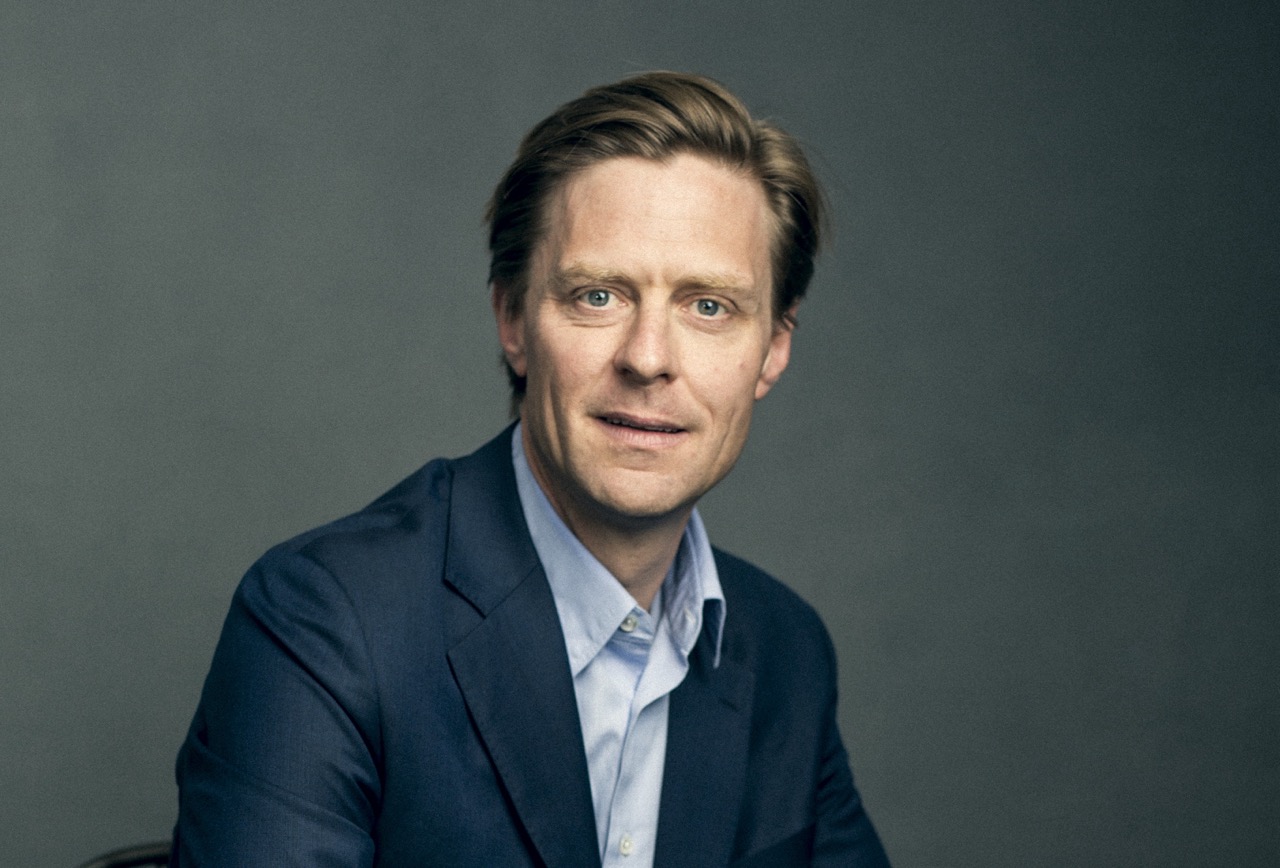
To combat these concerns Hardenberg (pictured below) said he uses a robust and radical quality framework to ‘navigate to the right countries and avoid those most vulnerable, as well as focusing on companies run by role model management teams with no significant leverage, no reputational issues and a strong corporate culture’.
This framework has seen the managers put significant capital into one of the areas of concern, technology, which makes up over 61% of the portfolio, according to the latest factsheet.
Hardenberg said despite the risks technology is the most attractive segment next to healthcare. He pointed to strong thematic developments in that sector, such as semiconductor hardware, companies investing in digitalisation, software and artificial intelligence, as well as the transition to alternative energy.
These themes are represented in his largest holdings which are South Korean businesses, Leeno Industrial, a semiconductor component tester, and Classys, a leading developer of non-invasive aesthetic medical devices, as well as Nasdaq-listed IT consulting business, Epam.
The companies have respective weightings of 6.9%, 5.7% and 5.6%, according to the latest factsheet.
Hardenberg believes investors are too pessimistic about the next five years, emphasising that while caution is important in EM, it is still in the middle of a mean reversion and post-pandemic recovery, which is becoming more evident across Southeast Asia.