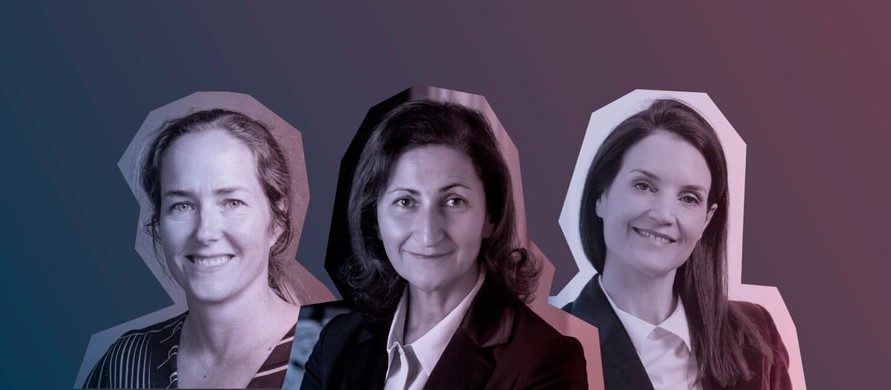
On the occasion of Women’s Day, celebrated on March the 8th, RankiaPro take a look at how the sector is evolving and how we are all making an effort to achieve greater gender parity, collecting the testimonies of three leading female professionals in the industry, including our Head of Investor Relations, Anna von Hanh, along with Maxime Carmignac and Rose Ouahba from Carmignac.
Anna’s Testimony:
My journey into finance was anything but typical. After 15 years in book publishing, I made the leap into the financial world—a shift that quickly revealed stark gender disparities between industries. For over a decade, I attended the Frankfurt Book Fair, where, based on my own observations, women seemed to make up around 80% of people working there. Now, instead of strolling through the book fair, I find myself traveling just 70 kilometers further to a finance fair in Mannheim, where the ratio appears exactly reversed. The contrast made me question why finance remains so male-dominated and what can be done to change that.
For generations, women have been underrepresented in finance. Girls are less frequently introduced to financial topics, and societal expectations continue to influence career choices. Many women gravitate toward creative (often less well paid) industries, possibly not only out of preference but also due to ingrained perceptions that men should be the primary earners. Meanwhile, men face pressure to pursue high-paying roles, reinforcing a gender imbalance in finance and investment.
A bias within the industry might be compounding this disparity. A 2021 CFA Institute study found that over three-quarters of women in investment believe the field is biased toward men, particularly in recruitment, promotions, and workplace culture. Addressing this requires systemic change, starting with early financial education. All schools should introduce finance and investment topics to both boys and girls, and women in the industry should be visible role models to inspire the next generation.
Even within finance, women are more commonly found in marketing and client relations rather than investment roles, further limiting women’s influence in financial decision-making. Yet, research shows that diverse teams make better decisions. Studies indicate that investment teams in the top quartile of gender diversity outperform those in the bottom quartile by 45 basis points annually. Despite this, only 12.5% of global fund managers are women, a figure that has barely changed in the past decade.
I have observed that women in finance tend to question themselves more, which can sometimes be seen as a lack of confidence. However, I believe, in investing, this self-reflection is an asset—it encourages deeper analysis, continuous reassessment, and a more balanced approach to risk. I have seen cases where overconfidence led to emotional attachment to an investment thesis, preventing rational decision-making. Encouraging diversity in investment teams fosters a broader range of perspectives, better risk management, and ultimately stronger performance.
At MCP, we are fortunate to have a 50/50 gender split within the team, and in my experience, this dynamic works exceptionally well. Yet, challenges persist—women still bear more childcare responsibilities, impacting career progression. While outsourcing is an option, many prefer to be present, particularly as children face growing digital distractions.
The COVID-19 pandemic briefly reshaped workplace dynamics, providing more flexibility. However, the recent push back to office-based work risks reversing this progress, making it harder for women to balance work and family. Companies that embrace flexibility will retain more skilled professionals, fostering a more diverse and resilient workforce.
Progress has certainly been made, but there’s still a long way to go. In some parts of the world, we’re even seeing signs that gender equality could be slipping backward. I truly hope that’s not the case—for the sake of my daughter and her generation. The future of finance will be stronger, more innovative, and more resilient with women fully included.
Leave a Reply